New Exclusive Set: Mew in Tight Elbow Rope Ties
Only for members – join to unlock full video
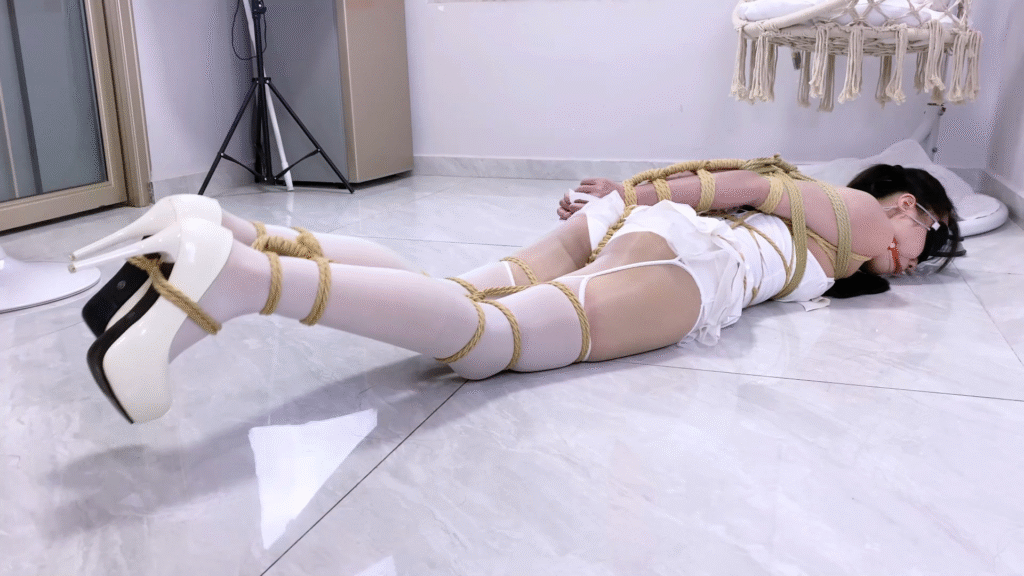
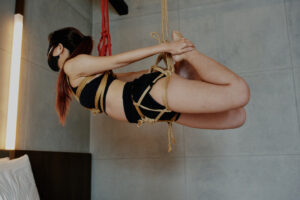
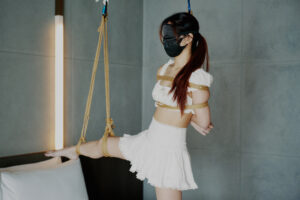
Performer Mew returns for a focused exploration of elbow tie patterns in rope movement practice. This session examines various techniques for binding the arms behind the back, with emphasis on symmetrical placement, balanced tension, and clean rope lines.
The photographs document different approaches to elbow positioning and rope application, serving as a visual reference for practitioners interested in arm and shoulder alignment within structured rope work.
What’s in This Series?
Each variation illustrates a specific technique and level of tension management. Here is a breakdown of the patterns explored:
- Classic Elbow Tie (Hands Behind Back, Elbows Approaching Contact) A symmetrical configuration that demonstrates full arm extension and precise rope placement. The pattern highlights clean ropework and consistent spacing when executed with proper technique.
- Progressive Layered Tie This variation shows rope applied in gradual layers, allowing observation of how incremental tension builds structured support while maintaining even distribution across the arms.
- Elevated Elbow Position In this setup, the elbows are positioned higher with shoulders drawn back, creating an upright postural alignment. The configuration emphasises shoulder mobility and focused body awareness during practice.
- Single Column Tie Combined with Elbow Wraps (Low Anchor Point) The pattern begins with a basic single column tie and progresses to additional controlled wraps, resulting in firm, stable arm positioning with minimal slack and clear geometric lines.
- Post-Tie Detail Images Close-up views document rope impressions and skin texture immediately after removal of the ties. These images serve as a reference for understanding the temporary effects of rope contact and proper tension management.
This series provides useful technical references for those studying elbow-focused ties, arm positioning, and symmetrical rope composition in a safe, educational context.
All rope work was conducted with careful attention to safety protocols, gradual progression, proper tension control, and continuous communication between practitioner and assistant.